
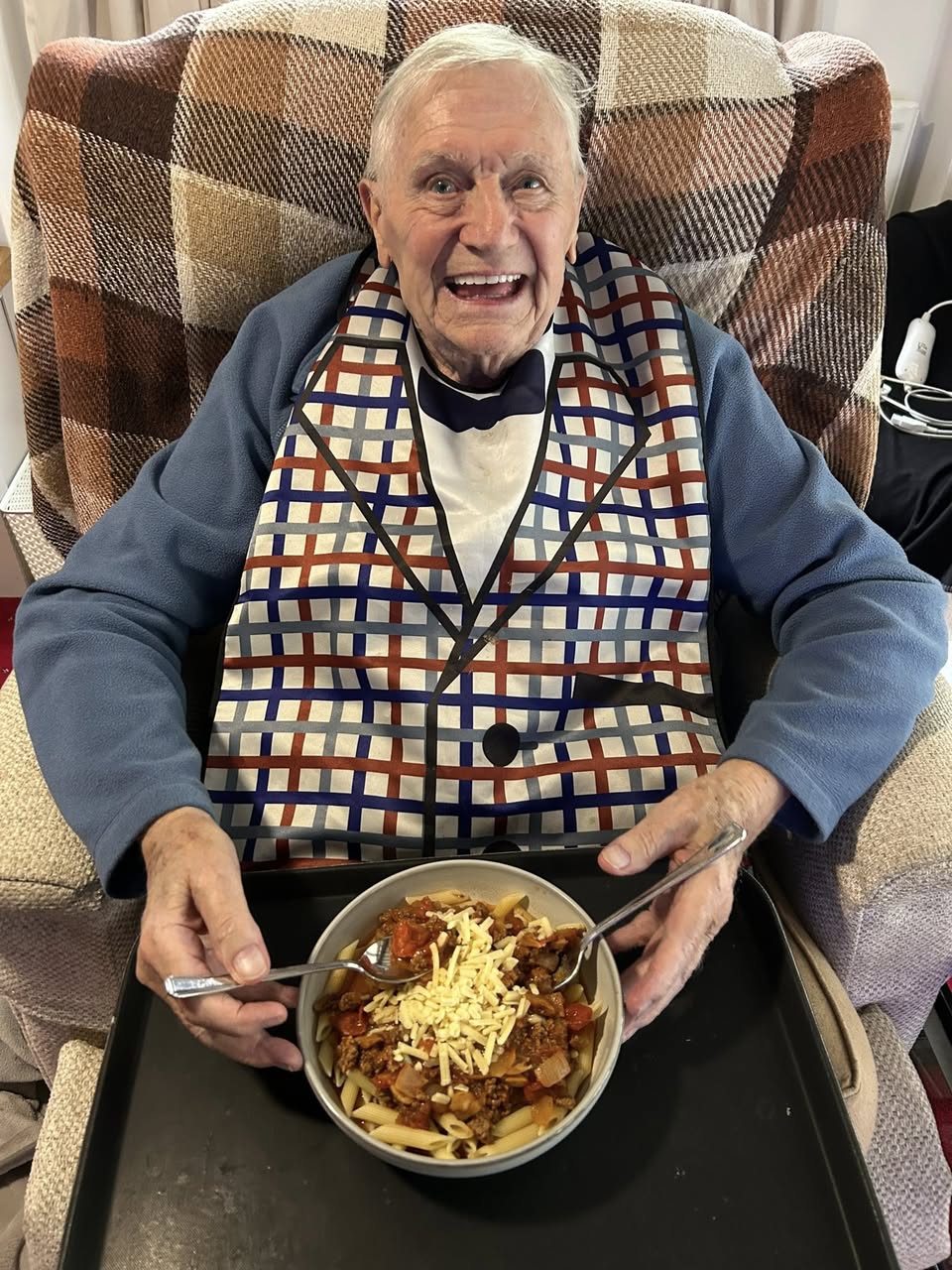
In a softly lit room, an elderly person sits wrapped in warmth — a plaid blanket draped over the chair, a patterned bib resting gently across their chest. In their hands, a bowl of penne pasta topped with rich meat sauce and a sprinkle of cheese. It’s not just a meal. It’s a message: You are seen. You are cherished.
This scene speaks volumes without saying a word. The tray, the spoon, the fork — all arranged with intention. The pasta, hearty and familiar, evokes memories of family dinners, laughter echoing in kitchens, and recipes passed down through generations. But here, it’s more than nostalgia. It’s care in action.
Food has always been a language of love. And for those in their later years, it becomes a bridge — between independence and support, between memory and presence. A warm bowl of pasta isn’t just about calories or comfort. It’s about dignity. About saying, “You matter, and this moment is yours.”
The geometric bib, the cozy chair, the quiet readiness to eat — they remind us that aging isn’t a loss, but a shift. A shift toward slower rhythms, deeper appreciation, and the kind of love that shows up in small, consistent ways.
This image is a portrait of grace. Of how a simple meal, served with care, can become a ritual of respect. It’s a reminder that nourishment isn’t just physical — it’s emotional, spiritual, and deeply human.
