
The Art and Science of Perfectly Boiled Eggs: A Culinary Essential
Hard-boiled eggs are a staple in kitchens around the world, valued for their simplicity, nutritional value, and versatility. Whether served as a protein-rich snack, sliced into salads, or transformed into deviled eggs, mastering the technique of boiling and peeling eggs is a foundational skill for both home cooks and culinary professionals.
🔬 Understanding the Egg Structure
An egg consists of several layers: the shell, the membrane, the albumen (egg white), and the yolk. When boiled, the proteins in the egg white and yolk coagulate, transforming the liquid interior into a firm, edible form. However, the challenge often lies in peeling the shell cleanly without damaging the egg white—a task that requires precision and technique.
🕒 Timing and Temperature: The Keys to Success
To achieve a perfectly cooked hard-boiled egg:
- Start with cold water: Place eggs in a saucepan and cover with cold water by about an inch.
- Bring to a boil: Heat over medium-high until the water reaches a rolling boil.
- Turn off the heat: Cover the pan and let the eggs sit for 9–12 minutes, depending on desired firmness.
- Cool rapidly: Transfer eggs to an ice bath immediately to halt cooking and make peeling easier.
🧪 The Role of Freshness
Fresh eggs are notoriously difficult to peel due to the strong bond between the shell and the membrane. For easier peeling, use eggs that are at least 7–10 days old. As eggs age, the pH level of the albumen increases, weakening the membrane’s grip on the shell.
🧼 Peeling Techniques
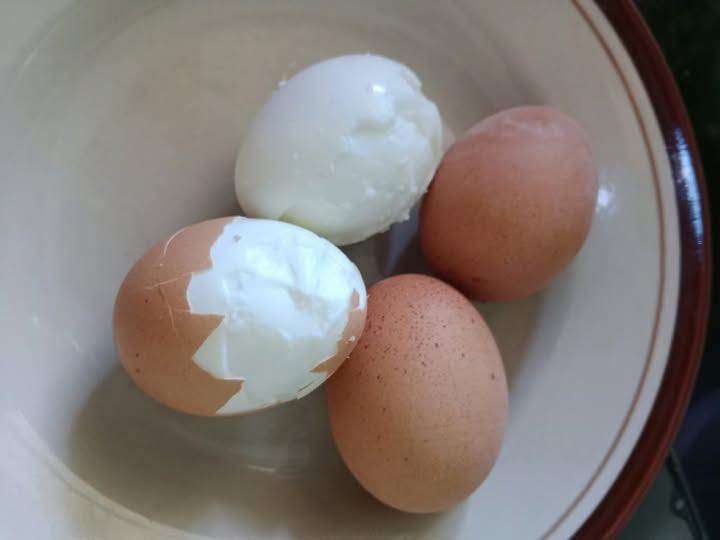
The image above illustrates a common scenario: partially peeled eggs with varying degrees of shell adherence. To improve peeling:
- Gently crack the shell all over and roll the egg between your hands.
- Start peeling from the wider end, where the air pocket is located.
- Peel under running water to help separate the shell from the membrane.
🍽 Culinary Applications
Hard-boiled eggs are more than just a breakfast item. They serve as:
- A protein boost in grain bowls and salads
- A base for deviled eggs and egg salad
- A garnish for ramen and other soups
- A component in traditional dishes like Niçoise salad or Scotch eggs
🧠 Conclusion
Perfecting the hard-boiled egg is a blend of science and technique. With attention to timing, temperature, and peeling methods, even the most stubborn shells can be conquered. For chefs and culinary enthusiasts alike, this humble ingredient offers endless possibilities—starting with a clean peel.